
From Possibility to Reality
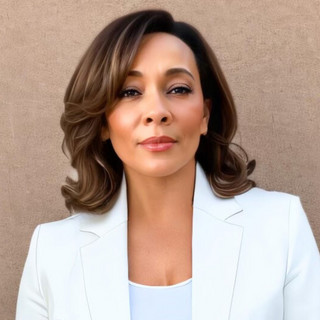

We’ve come to believe that an artist’s role is to challenge reality, to break it apart, and imagine what does not yet exist. Yet we rarely extend that same idea to the entrepreneur, who also looks at the world as it is, imagines what could be, and then sets out to build something that has never existed before.
Why do we separate them?
I had the privilege of growing up primarily in Westport, Connecticut, where creativity was never treated as something separate from education, business, or everyday life. It was woven into the culture. Art, entrepreneurship, education, and innovation existed alongside one another. Looking back, I realize how fortunate I was to grow up in an environment that never suggested creativity belonged to only one profession.
I am an artist.
I have known that for as long as I can remember.
Long before I began writing poetry at nine years old, I was creating. I drew, I collected, I imagined, and I carefully saved the things I made in my father’s old briefcase because, somehow, I already knew they mattered. No one had to tell me I was an artist. It was not something I became. It was something I had always been.
Over time, my creative life expanded into additional mediums. Poetry came first, followed by music, writing, law, business, media, intellectual property, and enterprise. Each became another way to explore ideas, solve problems, tell stories, and bring new possibilities into the world.
Years later, I enrolled in a drawing class in SoHo, convinced it would be relaxing. Instead, it became one of the most intellectually demanding courses I had ever taken. I discovered that beneath every drawing were principles of proportion, geometry, observation, and perception. My instructor insisted that we draw what we actually saw rather than the symbols our minds had been conditioned to substitute for reality. What I had assumed was purely artistic was deeply disciplined. That experience expanded my understanding of art. I realized that creativity and rigor were not opposites. Great creative expression often rests upon principles that must be studied, practiced, and refined.
That lesson stayed with me.
We rarely think of business the same way, yet I have come to recognize that business is one of the highest forms of applied creativity. Every great enterprise begins with imagination. It asks what does not yet exist, envisions a different future, and then brings together people, ideas, capital, technology, design, and culture to make that vision real. Like drawing, it requires both imagination and discipline. Inspiration alone is never enough.
The very best business leaders are artists in their own right. They do not simply optimize. They imagine. They do not merely manage organizations. They shape culture, identity, experience, and aspiration. They do not simply build companies. They create movements, solve problems, and leave behind ideas that continue long after they do.
This is one reason the Renaissance fascinates me. Many of the people we continue to admire centuries later, Leonardo da Vinci among my greatest inspirations, refused to live within a single category. They remind us that creativity was never confined to one discipline.
I feel connections across disciplines. I sense relationships between ideas that often appear unrelated, across law, business, history, media, culture, enterprise, and human behavior. Over time, those connections deepen, revealing possibilities that were not obvious at first. Sometimes the greatest challenge is not seeing the connection. It is finding the language, the medium, or the moment that allows others to see it too.
Instead of asking whether entrepreneurs are artists, perhaps we should ask why we have spent so much time separating forms of creation that have always been intimately connected.
Every meaningful act of creation begins the same way. Someone sees a possibility that others do not. Then comes the difficult work of giving that possibility form. Sometimes it becomes a painting. Sometimes it becomes a business. Sometimes it becomes a legal framework, a scientific discovery, a technological breakthrough, a film, a poem, or an idea that changes the way people see and move through the world.
The medium is never the point.
Neither is the category.
Creation itself is the constant, a boundless force whose purpose is to transform possibility into reality.
I believe the purpose of creation is not simply to make something new. It is to leave the world better than we found it.


Comments